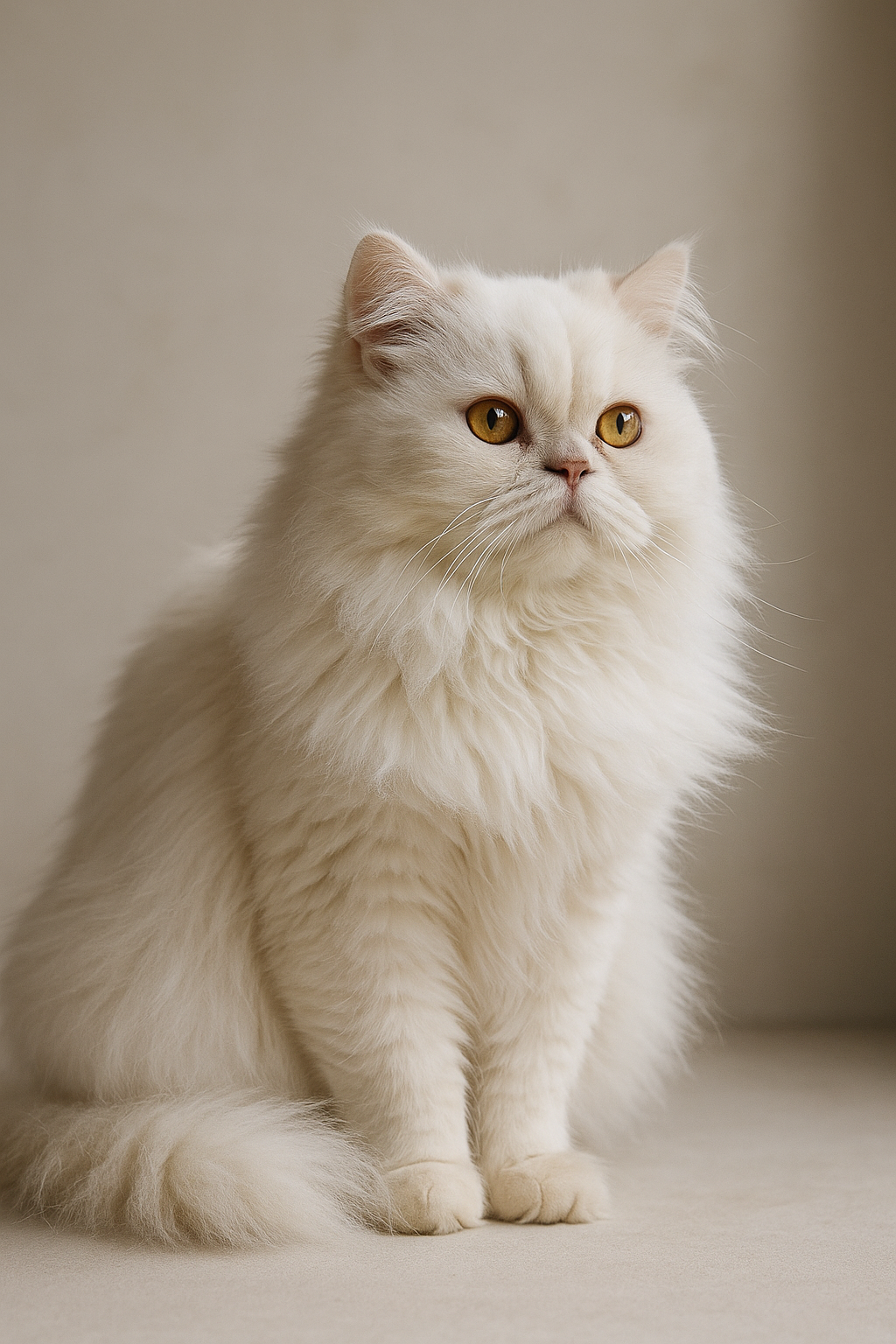
Persian Cat Grooming Guide
Persians are among the highest-maintenance cats when it comes to coat care. Their coat is long and fine — which looks beautiful but mats quickly, in places that are easy to miss until the mat has already formed. Many owners find daily brushing difficult to sustain, and the consequences build up faster than with most other long-haired breeds.
Why Persians mat faster than other long-haired cats
The texture of the Persian coat is finer than that of, say, a Maine Coon or Ragdoll. Fine hair has less natural separation between strands — it tends to clump rather than flow. Add in the areas where the coat is thickest (armpits, belly, behind the ears, around the collar area) and you have a coat that needs daily attention to stay mat-free.
The armpits are particularly problematic. Motion causes friction, friction causes matting, and the armpit area is where the cat moves most. Mats here are often the first ones to form, and because they're tucked away they're often the last ones to be noticed.
The maintenance trim option
Many Persian owners don't know this is available. A maintenance trim isn't a full haircut — it's a targeted reduction of coat length in the highest-risk areas (belly, armpits, around the hindquarters) to make home brushing manageable and reduce mat frequency.
It doesn't change the cat's appearance dramatically from the front, but it significantly reduces the grooming burden between professional sessions. For owners who want the Persian look without the daily intensive brushing, this is a realistic middle ground.
We discuss this at the first session if the coat's condition suggests it would help. It's not pushed as an upsell — it's genuinely useful for some cats and owners and not necessary for others.
Grooming frequency
For a Persian with a full coat and no maintenance trim, every four to six weeks is needed to stay ahead of matting. With a maintenance trim in place, six to eight weeks is more manageable for most owners.
If you're brushing daily at home, you can potentially extend the interval. But daily brushing has to be thorough — running a comb over the top coat doesn't reach the undercoat where mats originate.
Bathing Persians
Not all cats tolerate baths. Persians vary. Some handle it calmly, others find it very stressful. We assess this at the first session and won't force a bath if the cat is clearly distressed — a dry groom and careful brush-out is a valid alternative for cats that don't tolerate water.
When bathing is appropriate, we use a gentle, coat-specific shampoo followed by conditioning — Persian coats dry out easily and conditioning is not optional. The cat is dried slowly with warm air, not rushed with high velocity like a double-coated dog.
What to watch for at home
Run your fingers through the coat daily, especially in the armpits and belly. You're feeling for anything that resists — a small bump or tug means a mat is starting. If you catch it at that stage, a wide-tooth comb can usually work it out. If it's already firm and won't yield to gentle combing, don't force it — bring the cat in and we'll assess whether it can be worked out or needs to be removed.
Forced dematting is painful and breaks the trust between the cat and whoever is doing it. It's not worth the damage to the relationship for the sake of preserving the coat.
First visit with a Persian
We keep first visits slower than usual. Persian cats are often sensitive to new environments, and the session itself takes longer than with short-haired cats. If you can bring a blanket or item with familiar scent, it helps. Let us know beforehand if your cat has any previous negative grooming experiences — it changes how we approach the session.
Want to discuss your Persian's coat before booking? Get in touch — we're happy to advise on frequency and whether a maintenance trim would help.
Related guides: