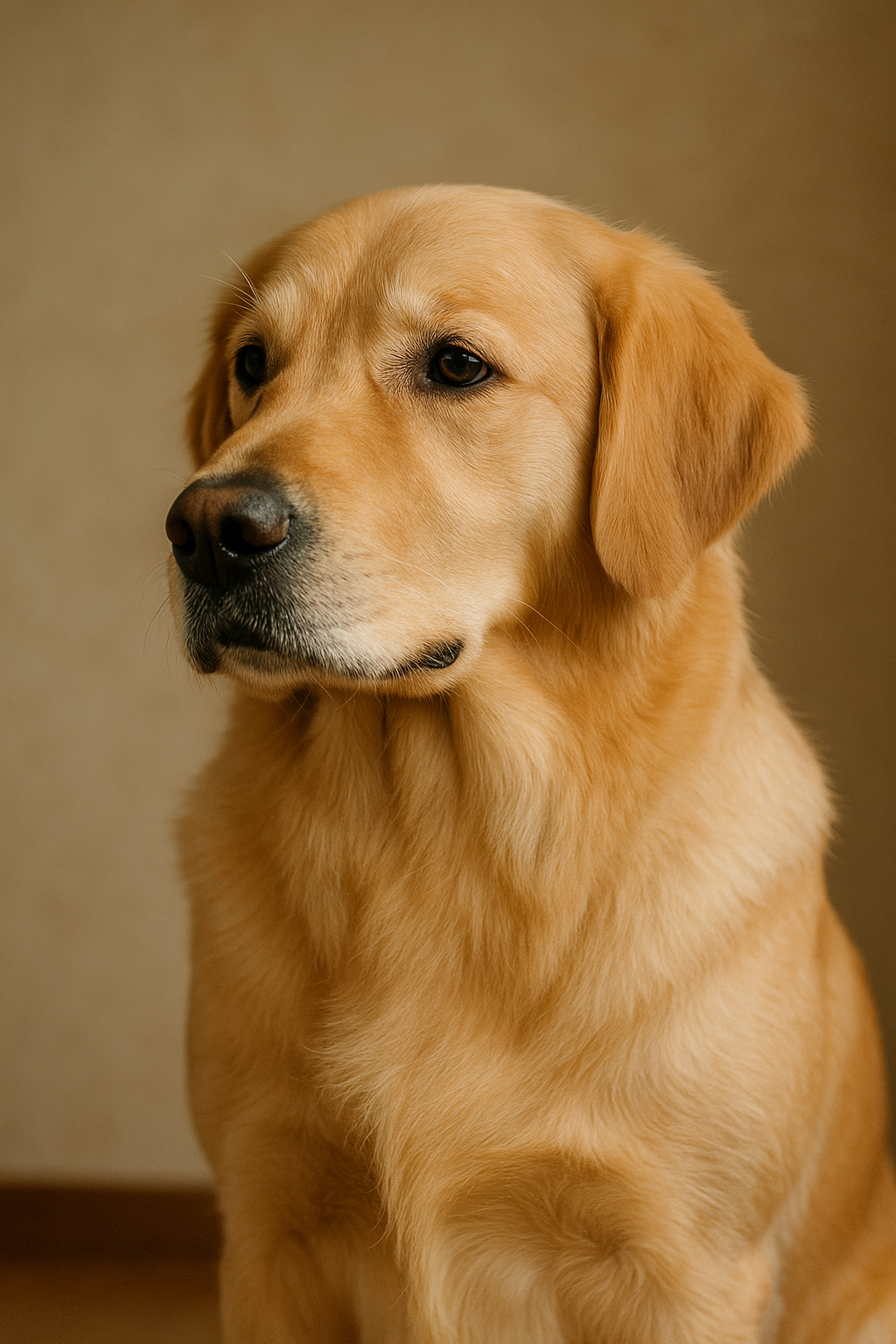
Golden Retriever Grooming Guide
Golden Retrievers are one of the most common breeds we see. They're also one of the most commonly under-groomed — not through neglect, but because the double coat doesn't signal problems the way a long-haired breed would. The fur keeps looking presentable long after the underlying coat has started to compact.
Understanding the double coat
Goldens have two distinct layers. The outer coat is water-resistant, slightly wavy, and what you see when you look at the dog. The undercoat is soft, dense, and insulating — it handles temperature regulation in both directions, warm and cold.
These two layers serve different functions and need to be treated accordingly. The outer coat can be trimmed and shaped. The undercoat cannot be cut effectively with scissors — it needs to be blown out and raked to stay healthy. This is the main reason that proper grooming equipment matters more for double-coated breeds than for most others.
Why blow-drying matters more than the cut
The blow-dry is the longest part of a Golden session — longer than the actual trimming. We use a high-velocity dryer to blast out the loose undercoat before we do anything else. If you skip this step and go straight to trimming, you're cutting over compacted undercoat. The coat looks fine for a few days, then mats start forming underneath.
Home blow-drying with a regular hair dryer doesn't accomplish the same thing. The velocity isn't there. It dries the outer coat but does little for the undercoat. This isn't a criticism — it's just how the physics work.
Grooming frequency
Every six to eight weeks is a reasonable baseline for a full session. During heavy shedding — usually spring and autumn — more frequent visits or a dedicated deshedding treatment between full grooms makes a real difference.
If you brush at home regularly, you can stretch the interval. If you don't, six weeks is better than eight — the coat compacts faster without regular home maintenance.
What a full session includes
For a Golden, a full grooming session covers: bath with a deshedding shampoo, high-velocity blow-out, brush-out to remove loose coat, light trimming around the ears, paws, and feathering on the legs and tail, ear cleaning, and nail trim.
We don't shave Goldens. If you've heard this recommended elsewhere — for heat management, for example — it's not supported by how the double coat actually works. Shaving removes the outer coat's ability to reflect heat and exposes the skin directly. We're happy to explain further if it's come up with a previous groomer.
What to watch for at home
Check behind the ears and under the armpits regularly — these are the spots where mats form first. A small mat caught early can be worked out with a slicker brush. A mat that's been there a few weeks needs to be cut out, which affects the coat's appearance and can be uncomfortable for the dog.
If the coat has started to feel dense and packed — rather than loose and fluffy — that's a sign the undercoat needs professional attention sooner rather than later.
Bringing your Golden to us for the first time
When you book, let us know the coat's current condition and roughly when it was last professionally groomed. If there's been a long gap, we'll manage expectations on timing and cost upfront. Coats that need significant work take longer, and we won't charge more than agreed without telling you first.
Ready to book a session for your Golden? Contact us with your dog's details and we'll confirm availability and price.
Related guides: