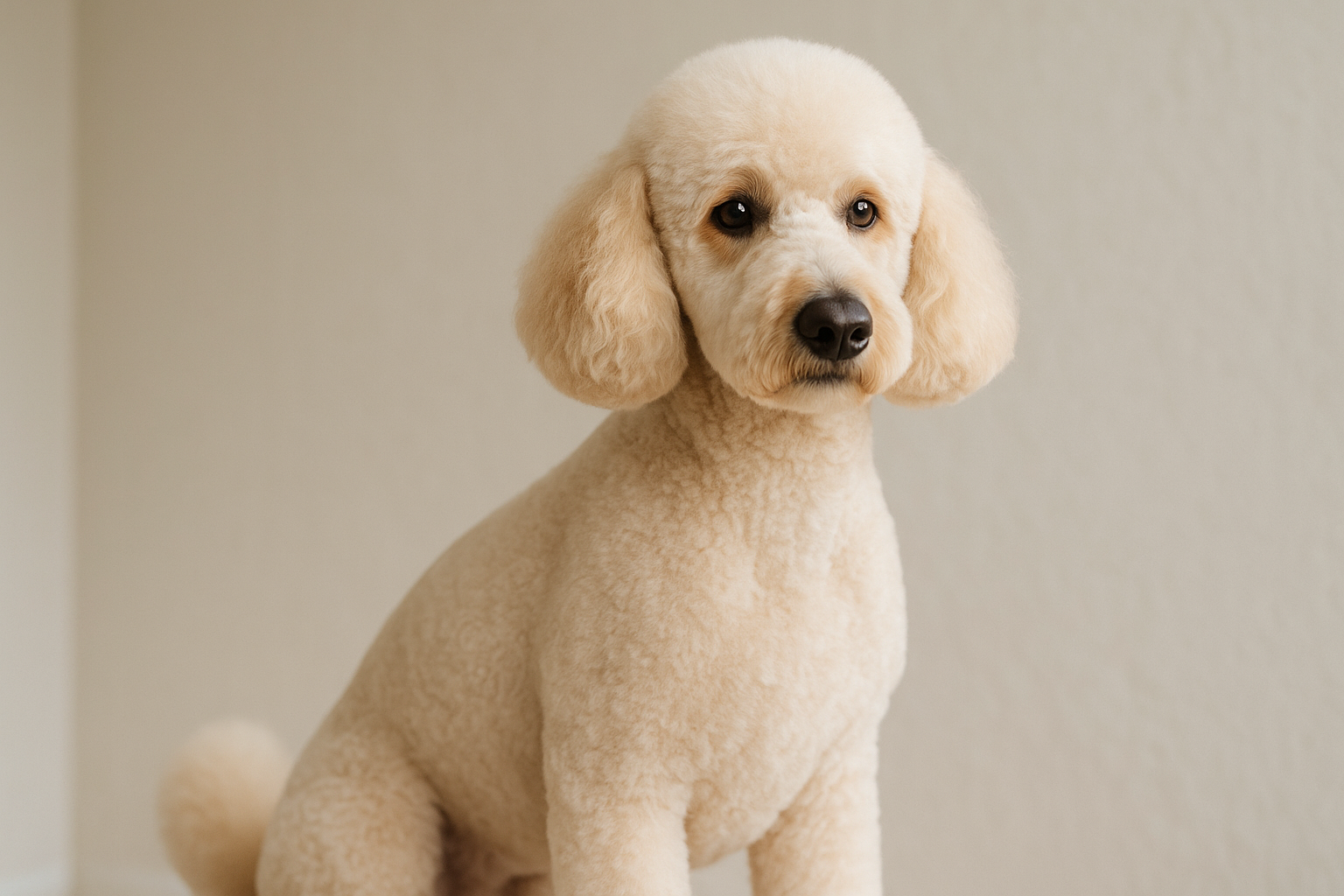
Poodle Grooming Guide
Poodles are one of the highest-maintenance coats in terms of grooming frequency. Their curly, continuously growing coat doesn't shed — which is the property that makes them popular for allergy-sensitive households — but it means the hair accumulates indefinitely. Without regular cutting and brushing, it mats faster than almost any other breed.
Why the non-shedding coat needs more attention
With shedding breeds, dead hair falls out and is removed naturally. With a Poodle, dead hair stays in the coat and tangles with new growth. Over time, if not brushed out, this creates dense mats that go all the way down to the skin. Mats at skin level are painful — they pull the skin, restrict blood flow, and can cause skin infections underneath.
The armpits, behind the ears, the groin area, and the underside of the legs are where mats start first. These areas have the most friction and tend to be overlooked during home brushing.
Cut styles — and why you should bring a reference
Poodles have more established cut styles than any other breed — the Puppy cut, the Teddy Bear, the Continental clip, the Lamb cut, and various owner-requested variations. Each looks quite different and is not interchangeable. Describing a cut verbally is unreliable; if you have a preference, bring a photo.
We'll look at the current coat length and condition and advise on what's achievable in one session versus what requires a longer grow-out period. If the coat is matted, the cut options are limited — dematted areas can't be blended the same way as coat that's in good condition.
How often to book
Every four to six weeks is the standard for Poodles. The coat grows quickly enough that at six weeks it's already getting long, and if you're not brushing at home two to three times a week, matting will have started in the friction areas before the appointment.
If you've let the interval stretch and the coat is matted, book as soon as possible. The longer a mat sits, the harder and more uncomfortable removal becomes.
Home brushing for a Poodle
Use a slicker brush and a metal comb. The slicker brush catches tangles in the top layer; the comb verifies you've reached the skin. If the comb doesn't pass through freely all the way to the skin, there's a tangle lower down that needs attention. Brushing only the surface of a Poodle coat gives a false impression that the coat is tangle-free.
Always brush before bathing, not after. Wet curls tighten any tangles that are already there, turning a manageable knot into a solid mat.
What a session includes
Brush-out before bathing, bath, blow-dry with straightening to allow for accurate cutting, cut or trim to agreed style, scissoring for clean lines, ear cleaning, nail trim, and paw pad tidy.
The blow-dry on a Poodle is done differently than on a double-coated breed — we dry the coat straight to see the true shape before cutting, rather than letting it curl. This is why Poodle sessions take longer than the coat volume alone would suggest.
Booking your Poodle's first visit? Get in touch — if you have a preferred cut style, mention it and we'll discuss what's achievable at the first session.
Related guides: